The massive technological advancements around the world have created
significant challenging competition among companies where each of the
companies tries to attract the customers using different techniques. One
of the recent tech- niques is Augmented Reality (AR). The AR is a new
technology which is capable of presenting possibilities that are
difficult for other technologies to offer and meet. Nowadays, numerous
augmented reality applications have been used in the industry of
different kinds and disseminated all over the world. AR will really
alter the way individuals view the world. The AR is yet in its initial
phases of research and development at different colleges and high-tech
institutes. Throughout the last years, AR apps became transportable and
generally available on various devices. Besides, AR be- gins to occupy
its place in our audio-visual media and to be used in various fields in
our life in tangible and exciting ways such as news, sports and is used
in many domains in our life such as electronic commerce, promotion,
design, and business. In addition, AR is used to facilitate the learning
whereas it enables students to access location-specific infor- mation
provided through various sources. Such growth and spread of AR applications pushes organizations to compete one another, every one of
them exerts its best to gain the customers. This paper provides a
comprehensive study of AR including its history, architecture,
applications, current challenges and future trends.

“The really compelling applications that are going to make AR take off just haven’t been built yet,” explained Jules White, Assistant Professor of Computer Science at Vanderbilt University. “Instead what we’ve got primarily in the market are gimmicky advertising experiences.”
Every object around you could give you its data
“AR is about showing you information that’s relevant to the physical objects around you” says White.
The app could determine that your tire pressure is low, or recognize that a part is dangerously worn.
Imagine your car breaks down and you can whip out your phone and
use a diagnostic app that can guide you in a repair. It could show you
where the jumper cables are and highlight where to connect them on the
battery. With the right level of visual awareness the app could
determine that your tire pressure is low, or recognize that a part is
dangerously worn and needs replaced.Maybe you’re out shopping in a store and you want to buy some light bulbs, but you have no idea which LED bulbs are the best. You take out your smartphone, tell it you want something under $20 at 40 watts with at least a 4 star review, and it highlights the relevant options that are on the shelf, right there on your screen.
Volkswagen is already doing it
The potential for augmented reality is huge, and it’s finally beginning to come to life.The Volkswagen MARTA app (Mobile Augmented Reality Technical Assistance) is designed to display superimposed information on the vehicle and enable technicians to complete a repair or guide them as they service a vehicle. It only covers one car right now and it’s for professional mechanics, but it makes so much sense that it’s bound to spread. There’s also the Audi AR app, which is like a user manual, enabling users to view the car using their iPhone and get data pop-ups on what they’re looking at.
“What really takes AR to the next level is when you have the domain expert and computer vision expert working together to build applications that are helpful to specific industries,” White explains.
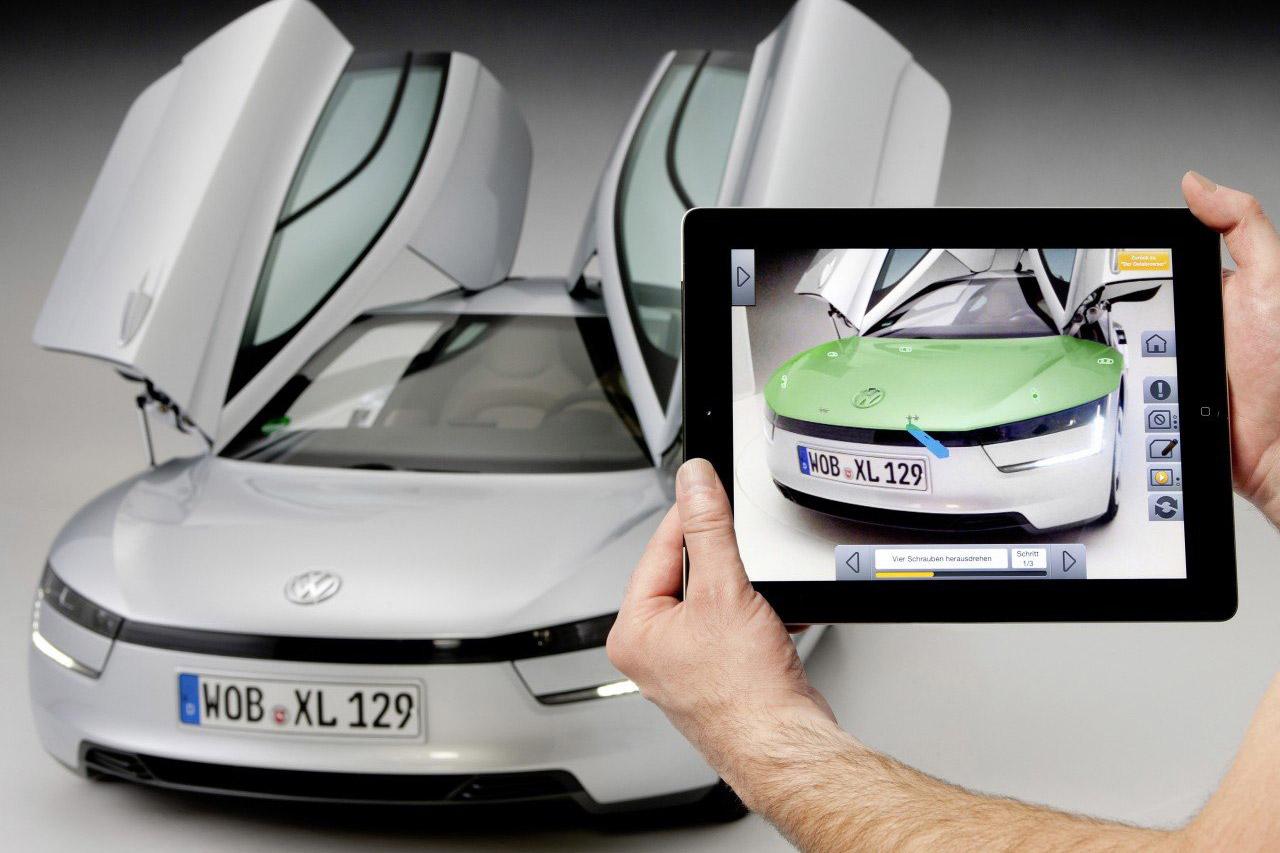
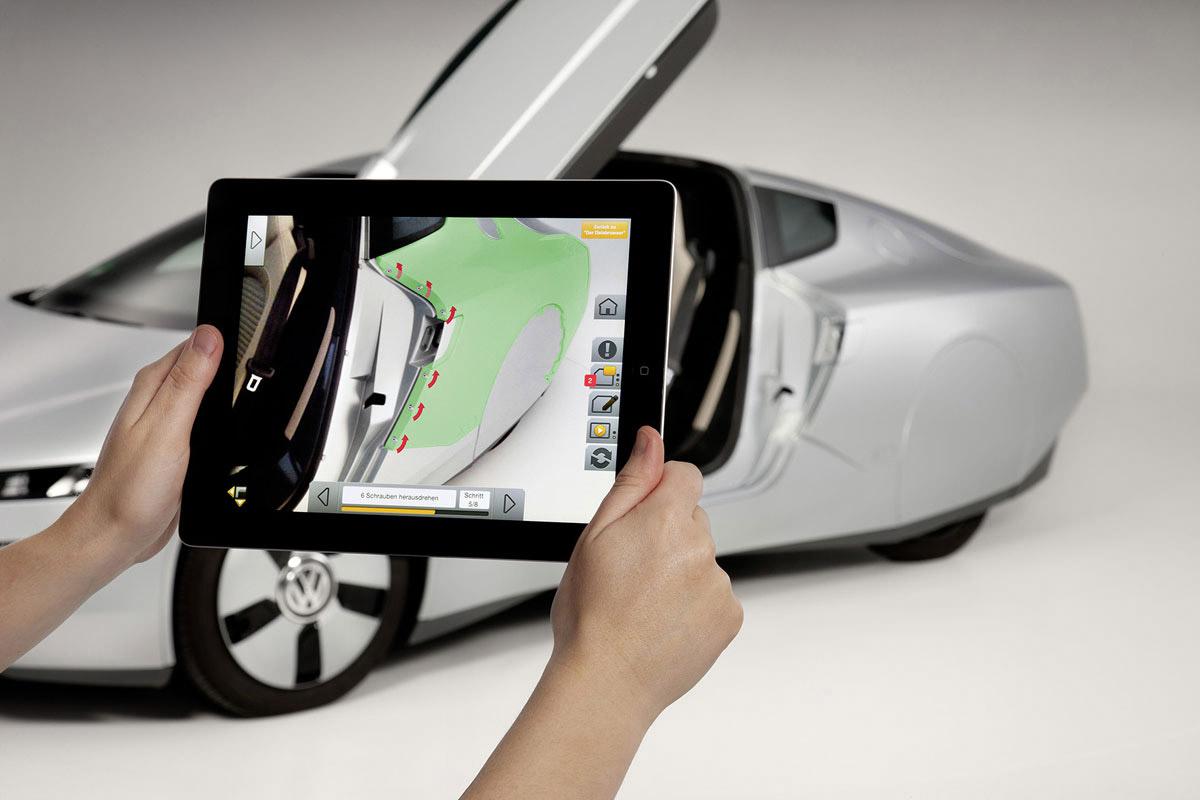
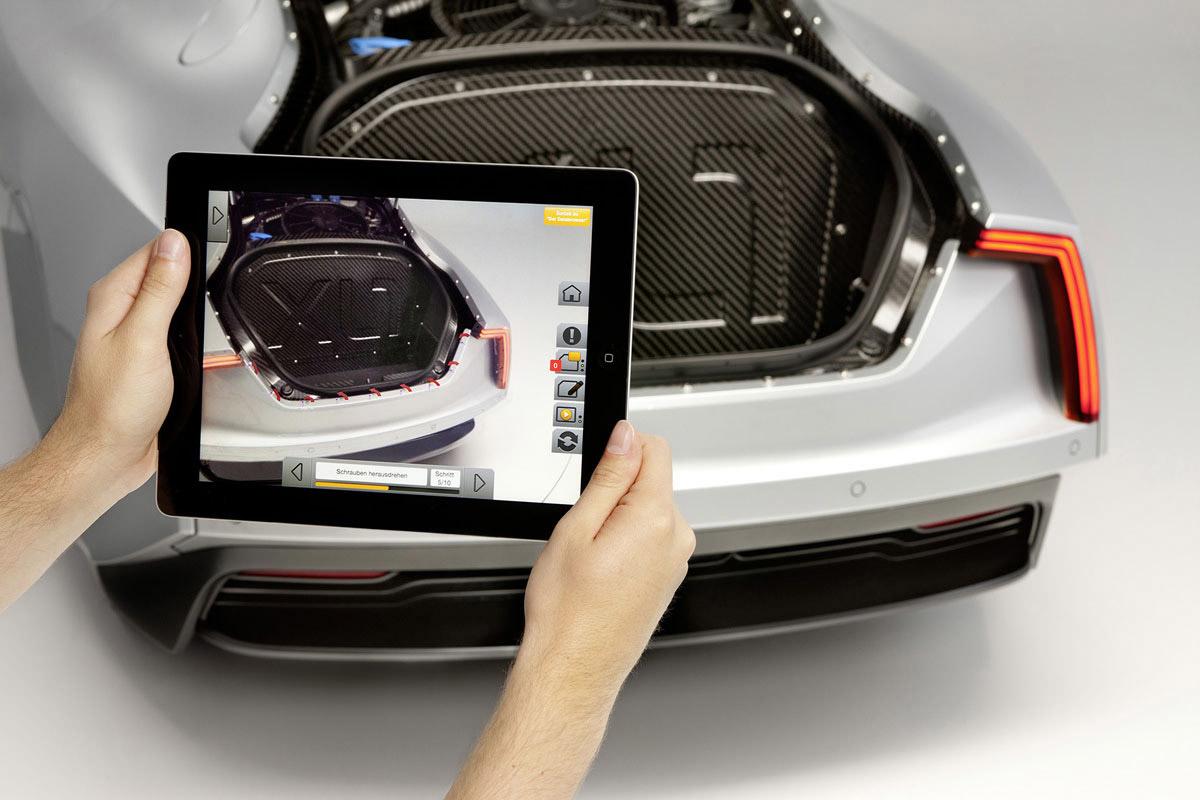
This could pave a route toward a killer AR app for the general public. Maybe it will come out of retail. As White suggests, “they could start with inventory management and planogram management and then realize it’s wonderful and go ahead and allow customers to tap into the same database of knowledge.”
Augmenting the real world better
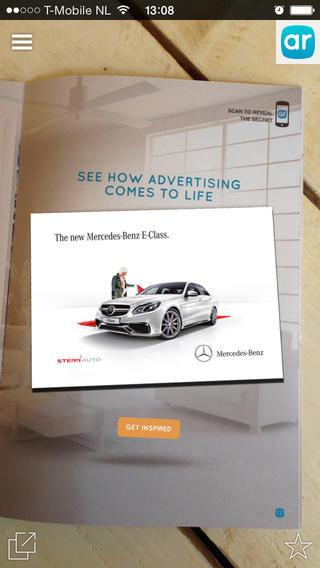
Current AR browsers, like Wikitude and Layar, tend to superimpose images and text in flat blocks. The position is based on geo tags and the data that’s offered simply floats on top of the real world. Quality and usability are poor and there’s no standardized platform.
What if you could see images, text, or even video content overlaid on the surface of a building?
What if you could see the images, text, or even video content, and it
was actually overlaid on the surface of a building? You could have a
virtual vacancy sign on a hotel with review data, or a giant post-it on
the 34th floor of a nearby building with details of the meeting you’re
due to have there. That’s an idea put forward in “Next-Generation Augmented Reality Browsers: Rich, Seamless, and Adaptive,” one of the papers from the IEEE journal.This involves mapping environments and spatial awareness, essentially advances in computer vision. The interesting thing about this is that it doesn’t necessarily have to rely on GPS or other sensors in the phone. Computer vision algorithms and rapidly improving camera hardware are actually more accurate than consumer grade GPS, even when it’s assisted by Wi-Fi.
If you have a database of images then a server in the cloud can analyze imagery from your phone and compare it to what’s in the database and potentially determine your position down to the millimeter.



Identifying objects better than Google Goggles
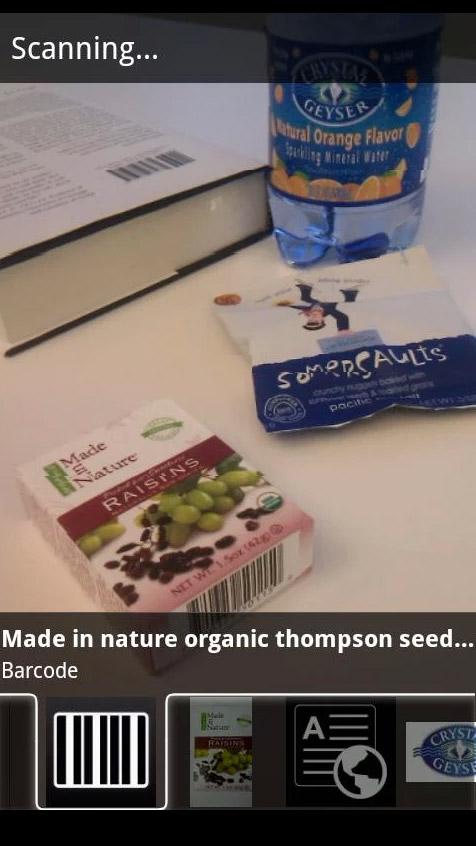
There’s another side to this and that’s the Google Goggles approach, where your AR browser is able to recognize objects and products and offer up useful information about them. We’ve moved beyond the old approach of scanning a single object with something like the barcode scanner app.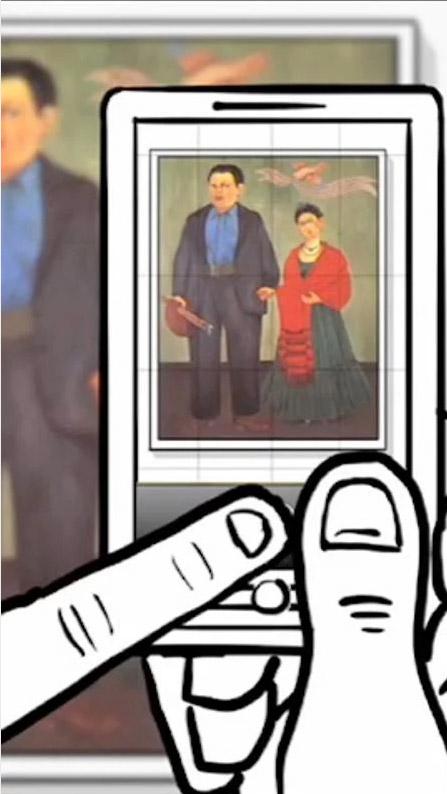


What about smart glasses?
There’s no doubt that smart glasses could be a major driver of AR, but are they ready for prime time? The technical capabilities of smart glasses right now would preclude things like real-time video compositing, which could be possible on a smartphone. There are also issues with the interface that voice controls can’t always solve. If you were looking at an engine, for example, you’d want to be able to point to a specific part, especially if you don’t know what it is.We’re already seeing concepts for how a new kind of interface might work. Samsung recently patented an AR keyboard that would project onto your fingers, and eye tracking is improving all the time.
White suggests “the more immersive the experiences become, the more natural we expect the interface to be.”

That level of immersion also raises safety concerns. What if an AR display or animation distracts you from a real world event and causes an accident? Then there’s cyber security. What if someone hacks into your AR display and alters information? It’s going to take some time to work these things out.
White acknowledges the part that projects like Google Glass have played in raising the profile of AR, but he feels mobile phones and tablets will drive AR in the short term because “it doesn’t require people to change their behavior … people are used to using their phone cameras to take pictures of things around them that interest them.”
How close are we, really?
The “Next-Generation Augmented Reality Browsers: Rich, Seamless, and Adaptive” paper suggests that for AR to hit the mainstream it needs to be easier to register points of interest. Content needs to move beyond static images/text to video, audio, and even 3D models and animations, and we need better user interfaces to help us interact and extract useful information.“While more work remains to be done, we believe these challenges can be addressed and resolved within a reasonably near future, hopefully leading to large-scale adoption of AR,” concludes the paper.
We’re sold. If someone with deep enough pockets puts the resources into it, then we could start seeing some truly awesome AR applications. Hopefully two years from now someone will and we can talk about how successful AR has become.


